English
 русский
Ask ten people to name the best shower curtain rod and you will get ten answers — and honestly, none of them are wrong. A rod that feels perfect in a spacious guest bathroom can turn into a rattling nuisance in a compact rental where tile wraps around three sides of the shower. After years of building curtain and shower hardware, we have learned to stop asking "which rod is the best?" and start asking "which rod is best for this opening, this wall, and this person?"
So this is not a list of products with a star rating next to each one. It is the conversation we would have with you over coffee: honest about the trade-offs, practical about measuring, and free of the sales language that makes most buying guides so hard to trust.
Content
- 1 What Actually Makes a Shower Curtain Rod Good
- 2 Four Rod Styles and the Bathrooms They Suit
- 3 Tension Rod or Drilled-In Rod? A Side-by-Side Look
- 4 Measure Twice: The Numbers That Decide Everything
- 5 Material and Finish: Where Cheap Rods Give Themselves Away
- 6 When a Curved Rod Is Worth the Extra Hardware
- 7 Small Details That Decide Whether You Regret It in Six Months
- 8 Questions We Get Asked Most Often
What Actually Makes a Shower Curtain Rod Good
Strip away the packaging and a shower curtain rod is doing three jobs at once: holding a wet liner that can weigh several kilos, surviving steam and soap scum every single day, and staying exactly where you put it. Rods rarely fail because of price. They fail because one of those three jobs was quietly ignored.
- 01
Holding power
A tension rod grips by friction. That means the spring, the rubber pads and the length range matter far more than the finish. A rod pushed close to its maximum extension has already spent most of its spring, and it will start slipping within weeks.
- 02
Corrosion resistance
Bathrooms are hostile places. Choose stainless steel or a properly plated finish; a thinly painted mild-steel tube will blister at the first scratch and leave rust streaks running down your tiles.
- 03
Genuine adjustability
The best rod covers your opening with room to spare. If your wall-to-wall measurement sits right at the top of a rod's stated range, size up rather than squeeze.
- 04
Wall friendliness
Screw-mounted rods are stronger, but they leave holes. If you rent, or if the tiles are new, that single fact usually decides the whole argument for you.
Four Rod Styles and the Bathrooms They Suit
Nearly every rod on the market is a variation on one of these four ideas. Match the idea to your bathroom first, then worry about colour and finish.
-
Spring tension rod
The classic. You compress it, slide it into place and let the spring push outward against both walls. No tools, no holes, five minutes of work. It is the right answer for tiled showers and rented flats, provided you buy one with a genuinely strong spring. This is the style we build most often, and the difference between a good one and a cheap one lives almost entirely inside the tube.
-
Twist-to-lock adjustable rod
Two halves slide inside each other and a collar locks them at your chosen length. Because the lock does the work rather than spring pressure alone, these handle heavier liners and wider openings, and they are much less likely to creep downward over the months.
-
Screw-mounted rod with flanges
Brackets are fixed to the wall with screws and anchors, and the rod then slots into them. It is the strongest option, the neatest looking in a finished bathroom, and the only sensible choice when the span is wide or the liner is heavy. The trade-off is holes in the wall and a drill in your hand.
-
Curved or L-shaped rod
Designed for corner showers, or for squeezing elbow room out of a standard alcove. Curved rods bow outward, which sounds cosmetic until you stand inside and realise what five extra centimetres does for your shoulders. They need more careful installation because the curve loads the fixings unevenly.
If your project also covers the windows, our breakdown of curtain rods versus curtain rails walks through the same decision from a different angle.
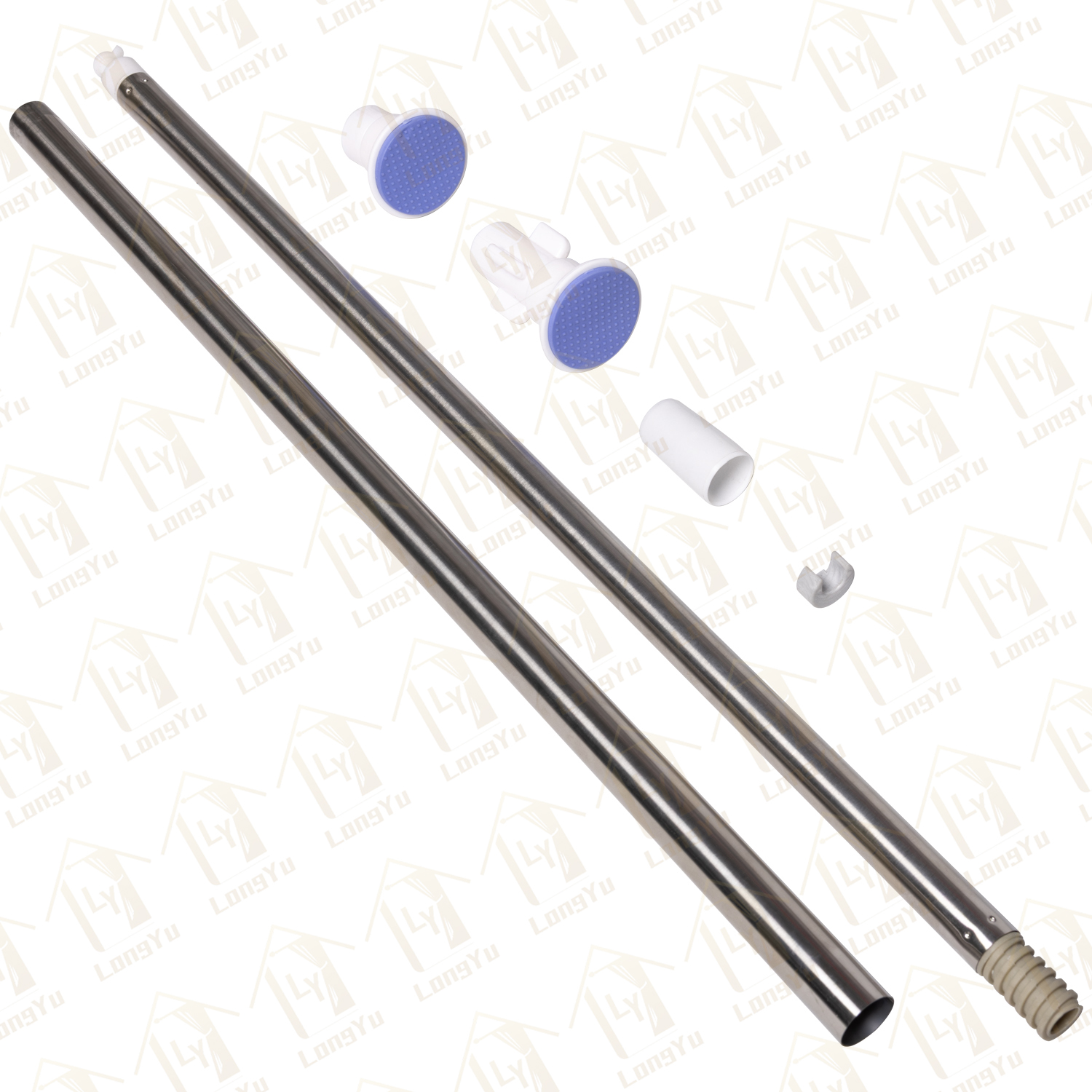 Adjustable Tension Shower Rod for Bathrooms and Small SpacesA tension-mounted adjustable option for shower areas, small windows and temporary partitions, with multiple lengths and plated or painted finishes for drilling-free setups.View Product →
Tension Rod or Drilled-In Rod? A Side-by-Side Look
Almost every difficult rod decision comes down to this one fork in the road. Neither answer is universally right — it depends on who owns the bathroom and how long the solution needs to last.
| Consideration | Tension rod | Screw-mounted rod |
|---|---|---|
| Installation time | Under a minute | 20–40 minutes |
| Tools required | None | Drill, level, screwdriver |
| Wall damage | None | Small screw holes |
| Weight capacity | Light to medium liners | Medium to heavy liners |
| Best wall surface | Tile, glass, smooth plaster | Drywall with anchors, studs, masonry |
| Adjustability | Continuous within its range | Fixed once fitted |
| Typical lifespan | 3–5 years | 8–10 years |
| Ideal for | Renters, guest bathrooms, quick refreshes | Family bathrooms, wide spans, heavy curtains |
Measure Twice: The Numbers That Decide Everything
Most of the complaints we hear about shower rods trace back to a measurement problem rather than a quality problem. Five minutes with a tape measure prevents nearly all of them.
- Measure wall to wall at the height you actually want the rod. Not at floor level. Bathrooms are rarely perfectly square, and an opening often narrows slightly as it rises.
- Repeat the measurement a hand's width lower and keep the smaller figure. That gives you the tightest point the rod has to pass through on its way up.
- Look at what is on those walls. Tile, glass, painted plasterboard or a window frame? A tension rod needs a flat, solid, non-slip surface on both sides to grip properly.
- Check that your number sits comfortably inside the rod's stated range. A rod rated 110–200 cm is at its weakest at 195 cm. Aim for the middle two-thirds of the range whenever you can.
- Check the drop. Measure from the rod down to the floor or tray and compare it with the curtain you plan to hang. A liner that pools in the tray will quietly wick water onto the bathroom floor.
Material and Finish: Where Cheap Rods Give Themselves Away
Two rods can look identical on a shelf and behave completely differently after six months of steam. The tube and the coating are where the money either went or did not.
- Stainless steel (304 grade) — the benchmark for bathrooms. It resists rust even where the surface is scratched and holds its shape under load. Heavier than aluminium, which in this case is a good sign.
- Aluminium — light, stiff and rust-free in its own right, but it wants a protective coating to survive constant damp. Fine for a spare bathroom, less ideal for a shower used twice a day.
- Plated steel or zinc — perfectly serviceable when the plating is thick and even. The failure mode is a chip or scratch, after which rust spreads outward from that single point.
- Plastic — acceptable for end caps, hooks and light fittings. Not for the tube itself unless the span is very short indeed.
For a shower that sees daily use, a stainless steel tension rod is the option we recommend most often, because it removes corrosion from the list of things that can go wrong.
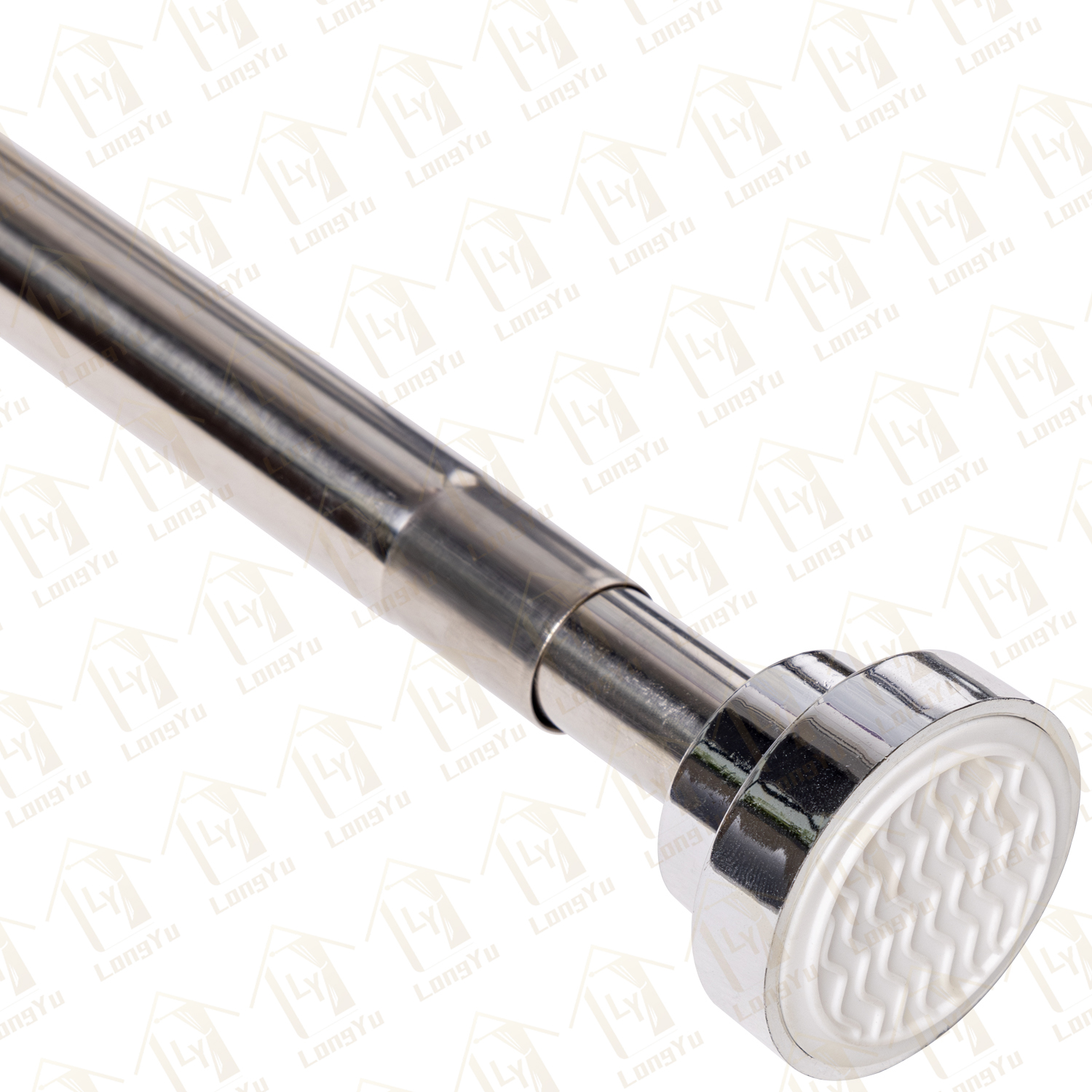 Stainless Steel Tension Shower Rod for Daily UseA corrosion-resistant stainless steel tension rod for daily shower use, with plastic caps for stable wall contact and a cleaner look than standard iron rods.View Product →
When a Curved Rod Is Worth the Extra Hardware
A curved rod is not a gimmick. In a standard 75 cm alcove, the bow can add ten to fifteen centimetres of usable room at shoulder height — the difference between a relaxed shower and a plastic liner stuck to your arm. In a corner shower, a curved or L-shaped rod also keeps the curtain off the tray edge, so water stays where it belongs.
Choose a curved rod when
- Your shower sits in a corner or a shallow alcove
- The liner clings to you every time you shower
- You can fix into solid anchors or studs
Stay straight when
- The opening is already wide and comfortable
- You rent and cannot drill at all
- The ceiling is low and the extra arc would foul the curtain
One practical note: a curved rod needs a slightly wider curtain and hooks that slide smoothly around the bend. Buy the rod first, then take its measurements with you when you choose the fabric.
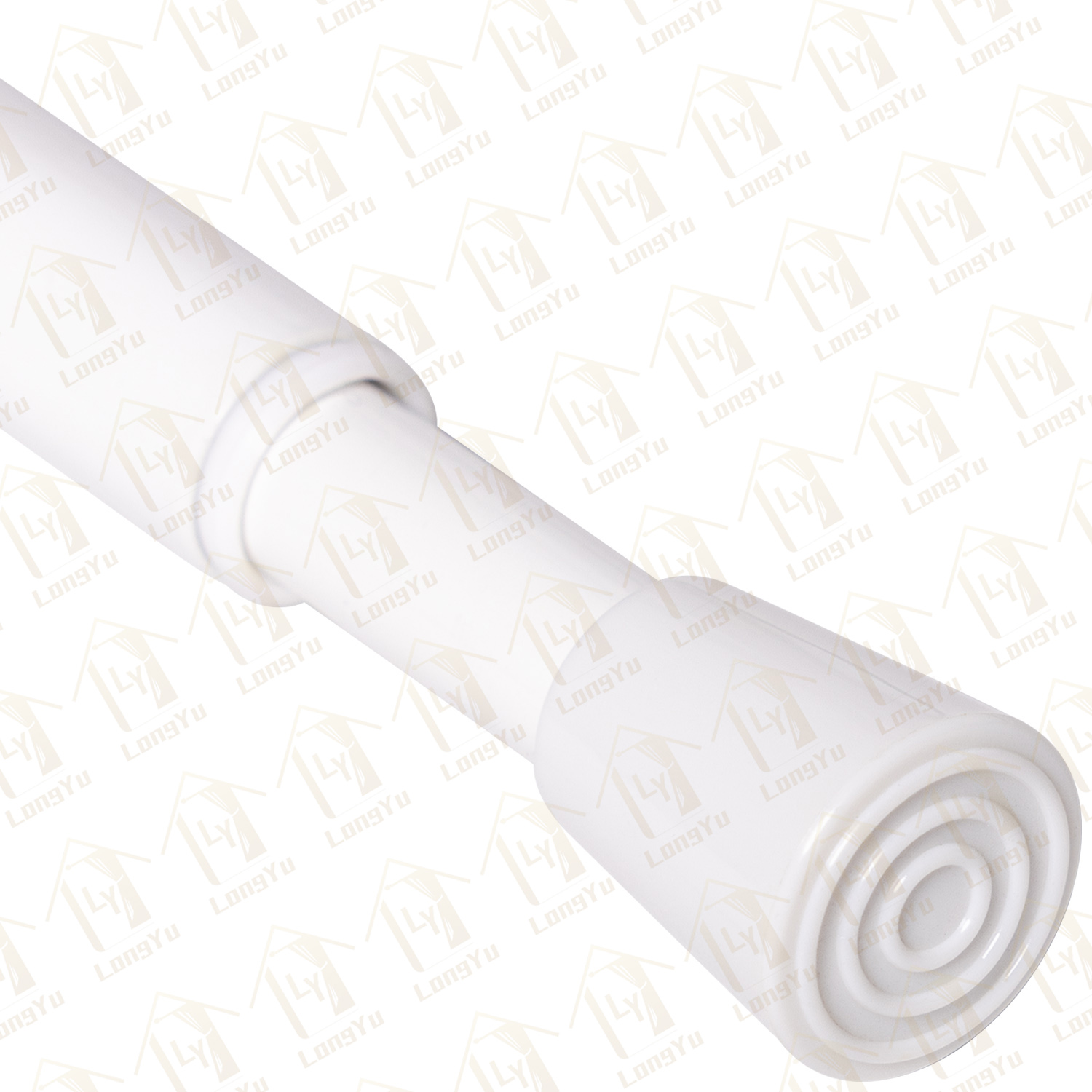 Curved Tension Shower Rod for Compact BathroomsA tension-mounted curved rod for compact or rental bathrooms, supporting lightweight shower curtains and helping keep the curtain clear of the shower area.View Product →
Small Details That Decide Whether You Regret It in Six Months
None of these takes more than a minute to check, and each one has spoiled more showers than any manufacturing defect we have ever seen.
- Hook material. Metal hooks glide across the rod for years; plastic ones are quieter but crack in cold bathrooms. Match the hook to the rod, not to the cheapest pack on the shelf.
- Liner versus curtain. A fabric outer curtain needs a waterproof liner behind it. Hanging a fabric curtain alone in a wet shower is the fastest way to ruin both the fabric and your paintwork.
- Wall condition. Tap along the tile before you tension anything. A hollow-sounding tile can crack under a spring's outward pressure, and no rod is worth that repair.
- Wet weight. A soaked heavy liner can weigh several kilos. If you like thick fabric, choose a screw-mounted rod rather than testing a spring's patience.
- Cleaning access. Rod ends collect a surprising amount of soap residue. Rubber pads that pull off easily make the twice-yearly clean a two-minute job instead of a struggle.
Questions We Get Asked Most Often
How much weight can a tension rod really hold?
More than most people expect, as long as it is sized correctly. A well-made rod sitting in the middle of its range will happily carry a standard liner plus a fabric curtain. The problem starts when the rod is extended close to its limit, where spring force drops sharply.
Will a tension rod damage my tiles?
Not if the tiles are sound and the rubber pads are clean. The pressure is spread across a small but flat contact area. Avoid fitting one over a cracked tile, a grout line running vertically through the contact point, or a surface that flexes.
Why does my rod keep sliding down?
Nine times out of ten it is over-extension, not a broken spring. Second most common cause is a slick surface — polished porcelain, glass or a damp painted wall — where the rubber cannot bite. A small clean and a shorter span usually solve it.
Do I need a liner as well as a curtain?
Yes, if the outer curtain is decorative fabric. The liner takes the water, the curtain takes the light. Hanging them on separate rings on the same rod works fine and makes cleaning far easier.
Choosing the best shower curtain rod is really a small exercise in matching: the right holding method for your wall, the right material for your climate, and the right length for your opening. Get those three right and the rod disappears into the background, which is exactly what good hardware should do.
If something here still does not quite match your bathroom, our frequently asked questions cover the rest — and you are always welcome to ask us directly.